What if the most important moment wasn’t when an emergency happened—but the few minutes before it?
When most people think about personal safety, they imagine dramatic situations: a serious assault, a medical emergency, or someone calling 999.
The reality is very different.
Most emergencies don’t begin as emergencies. They begin as ordinary situations that gradually become something more serious.
A person walking home starts to feel uncomfortable because someone appears to be following them.
A student leaves the library late at night and realises the campus feels unusually quiet.
A lone worker visits a customer and senses that something isn’t quite right.
An elderly person trips, believing they can get back up, only to discover they can’t.
A driver breaks down in an unfamiliar location.
A young person becomes separated from friends on a night out.
In many of these situations, people don’t immediately ask for help. They tell themselves, “I’m probably overreacting,” or “I’ll be fine.”
Unfortunately, waiting until a situation has become an emergency often means valuable time has already been lost.
The Barrier to Asking for Help
One of the greatest challenges in personal safety is not the availability of help—it’s people’s reluctance to ask for it.
There are many reasons:
- They don’t want to worry family or friends.
- They feel embarrassed.
- They think someone else may not take them seriously.
- They convince themselves the situation will improve.
- They simply don’t want to be a burden.
By the time they realise they genuinely need assistance, the situation may already have escalated.
Reducing the barriers to asking for help is one of the simplest ways to improve personal safety.
Prevention Is Better Than Response
We often celebrate emergency services for the incredible work they do after an incident has occurred.
However, preventing an incident from becoming an emergency is even better.
Early intervention can:
- Reduce risk.
- Improve outcomes.
- Give trusted contacts more time to respond.
- Allow professional assistance to be organised sooner.
- Provide reassurance before fear turns into panic.
Personal safety should not begin when something has already gone wrong. It should begin the moment someone starts to feel vulnerable.
Technology Should Make Asking for Help Easier
Technology has transformed the way we communicate, navigate and stay connected.
It should also make it easier to ask for help.
The best personal safety technology doesn’t replace friends, family, universities, employers or emergency services.
Instead, it helps people reach them sooner.
At SafeHalo, every feature has been designed around one simple question:
How can we make it easier for someone to ask for help before a situation escalates?
That philosophy has shaped features such as:
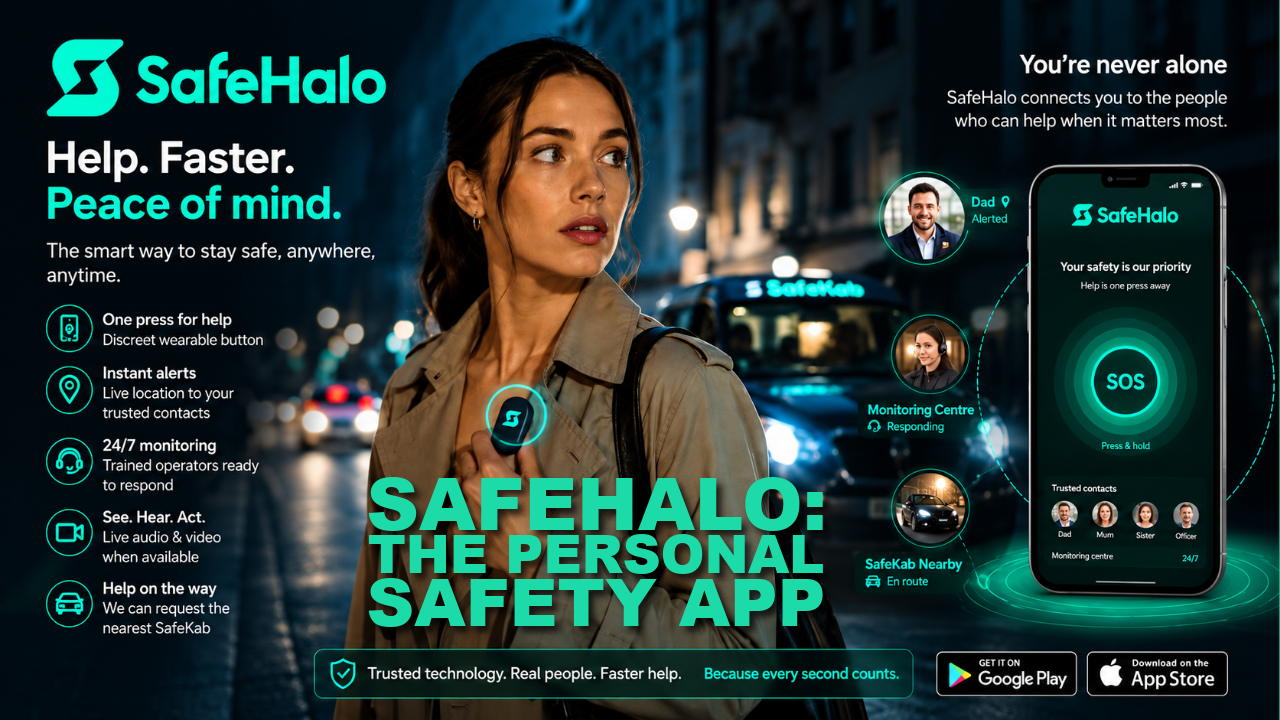
- A discreet wearable SOS button that can be activated without unlocking a phone.
- Immediate alerts to trusted contacts with live location sharing.
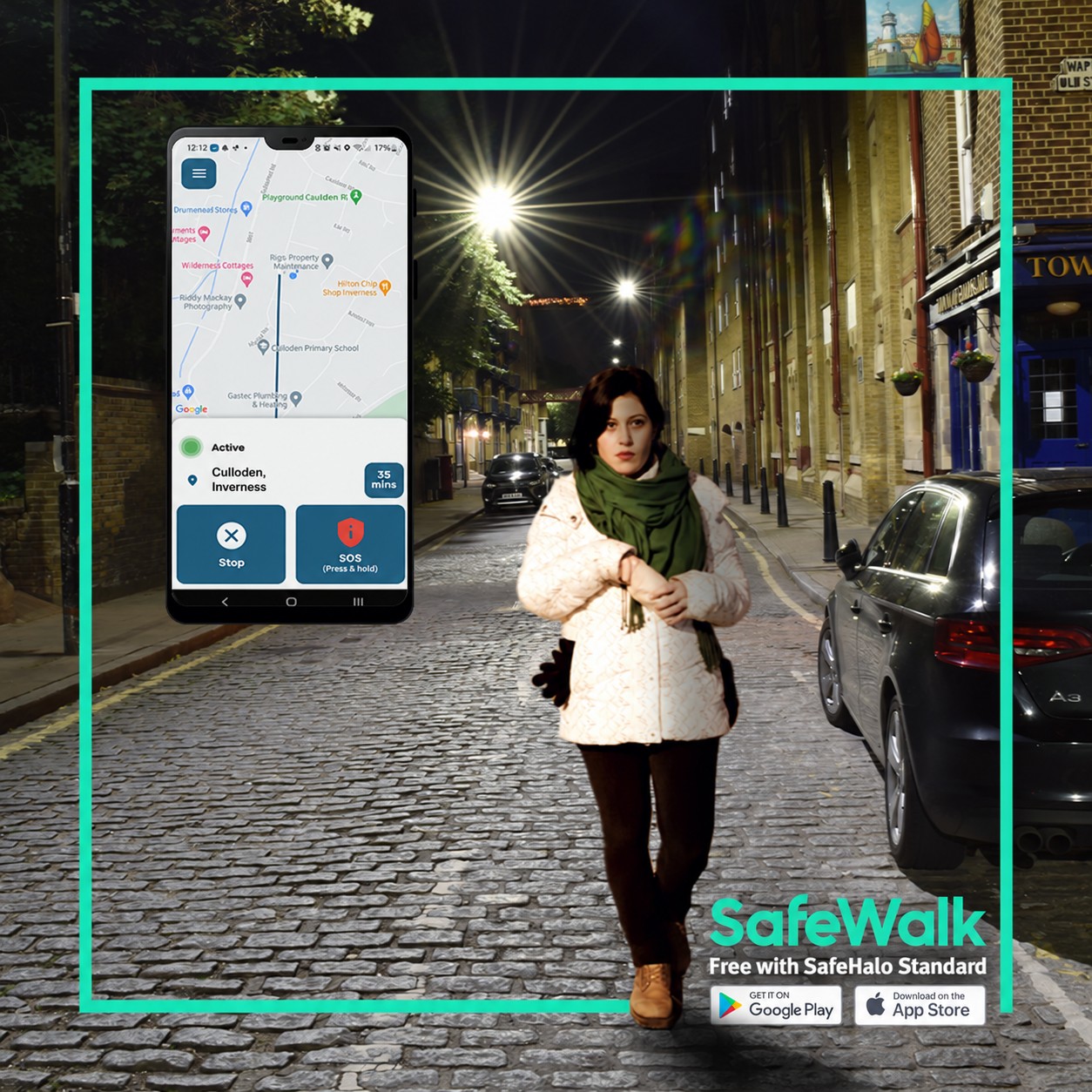
- SafeWalk, allowing someone to share their journey with a trusted person.
- Check on Me, which automatically alerts others if a user fails to check in.
- Automatic fall detection.
- Optional 24/7 professional monitoring.
- Live audio and video communication, helping provide real-time situational awareness when a phone is accessible.
These features are not designed only for emergencies.
They are designed to help prevent emergencies.
A Shared Responsibility
Creating safer communities is not the responsibility of one organisation alone.
Universities, schools, employers, local authorities, community safety partnerships, emergency services, families and friends all have an important role to play.
Technology can strengthen these existing support networks by making communication faster, simpler and more accessible.
The goal is not to replace human support.
The goal is to make it easier to access it.
Building a Culture of Early Intervention
Imagine if asking for help became as natural as checking directions on a map or sending a text message.
Imagine if people felt comfortable saying:
“Something doesn’t feel right.”
“Could you stay with me while I walk home?”
“I’m running late—can you keep an eye on my journey?”
“I’ve fallen and I need help.”
These are not signs of weakness.
They are examples of good judgement.
The earlier support begins, the greater the opportunity to prevent harm.
Looking Ahead
As personal safety continues to evolve, success should not be measured solely by how effectively we respond to emergencies.
It should also be measured by how many emergencies never happen because someone received help early enough.
At SafeHalo, we believe the future of personal safety is built on early intervention, trusted support and timely communication.
Because the best emergency is the one that never happens.
About SafeHalo
SafeHalo is a personal safety platform developed in Loughborough, United Kingdom. It has been designed to make requesting help simple, discreet and accessible, combining wearable SOS activation, trusted contacts, SafeWalk, Check on Me, automatic fall detection, live location sharing and optional 24/7 professional monitoring.
Learn more: www.safekab.org/safehalo