Two passengers take the same journey on different evenings. One pays the usual fare. The other pays considerably more because demand is high.
Is that fair business, or does getting home deserve a different approach?
Hotels charge more when rooms are scarce. Airlines change ticket prices as seats sell. Should cab drivers and operators have the same freedom when everyone wants a car at once?
At SafeKab, we think this is a discussion worth having—with drivers and passengers both at the table.
What does a meter actually offer?
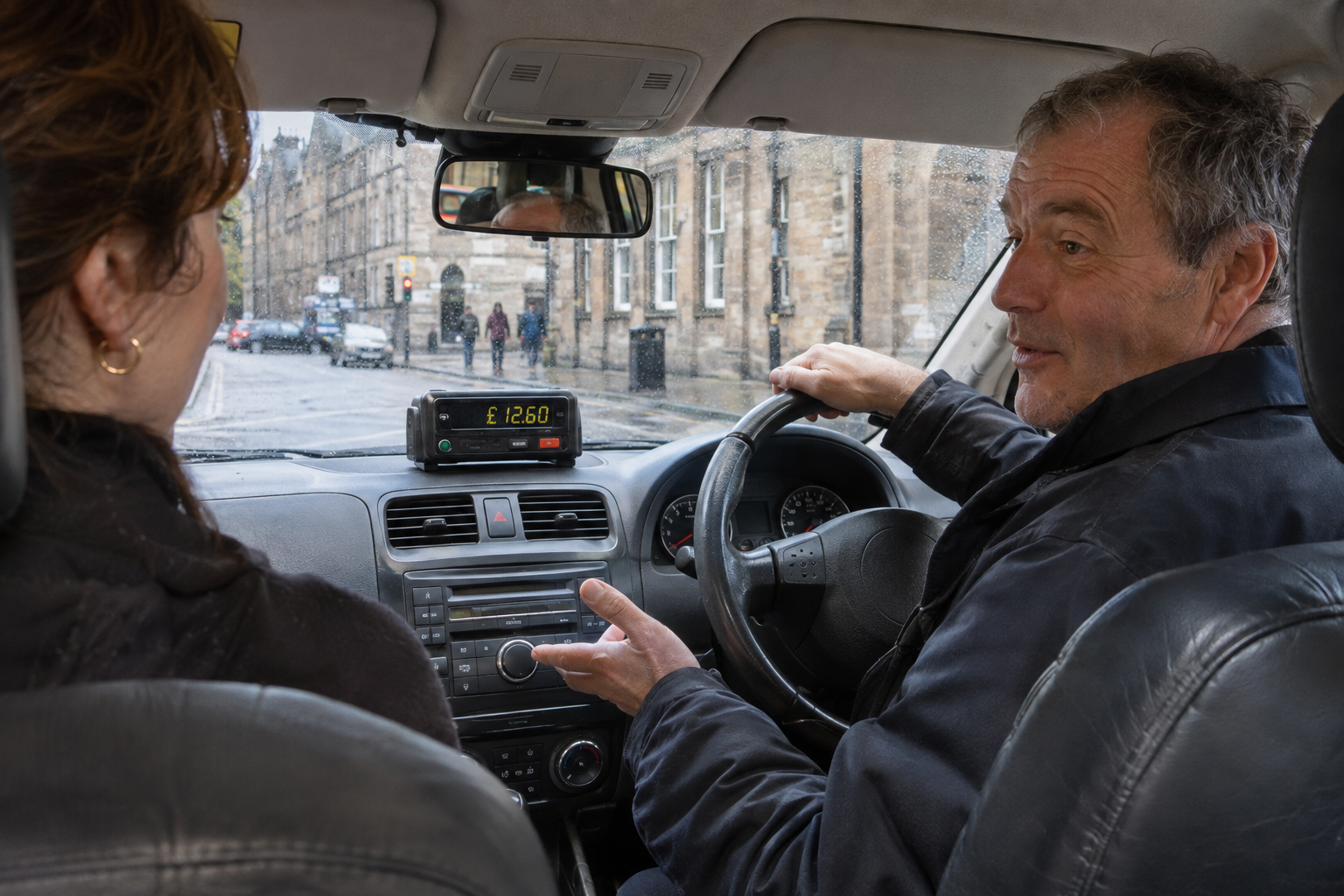
A taximeter provides a clear basis for calculating a fare. Under the applicable tariff, the charge builds according to factors such as distance and time.
That gives the driver and passenger a shared reference point. Neither should have to negotiate a price at the roadside or guess how the fare was calculated.
But there is an important distinction: knowing the pricing rules is not the same as knowing the final price.
Traffic, waiting time and changes to the journey can affect a metered fare. An upfront fixed price can offer greater certainty about the total, provided it is genuinely fixed and any conditions are explained.
The useful comparison is therefore between three approaches:
- A metered fare: calculated using a published tariff.
- An agreed fixed fare: confirmed before the journey, with clear conditions.
- A demand-based fare: a price that changes according to how busy the service is.
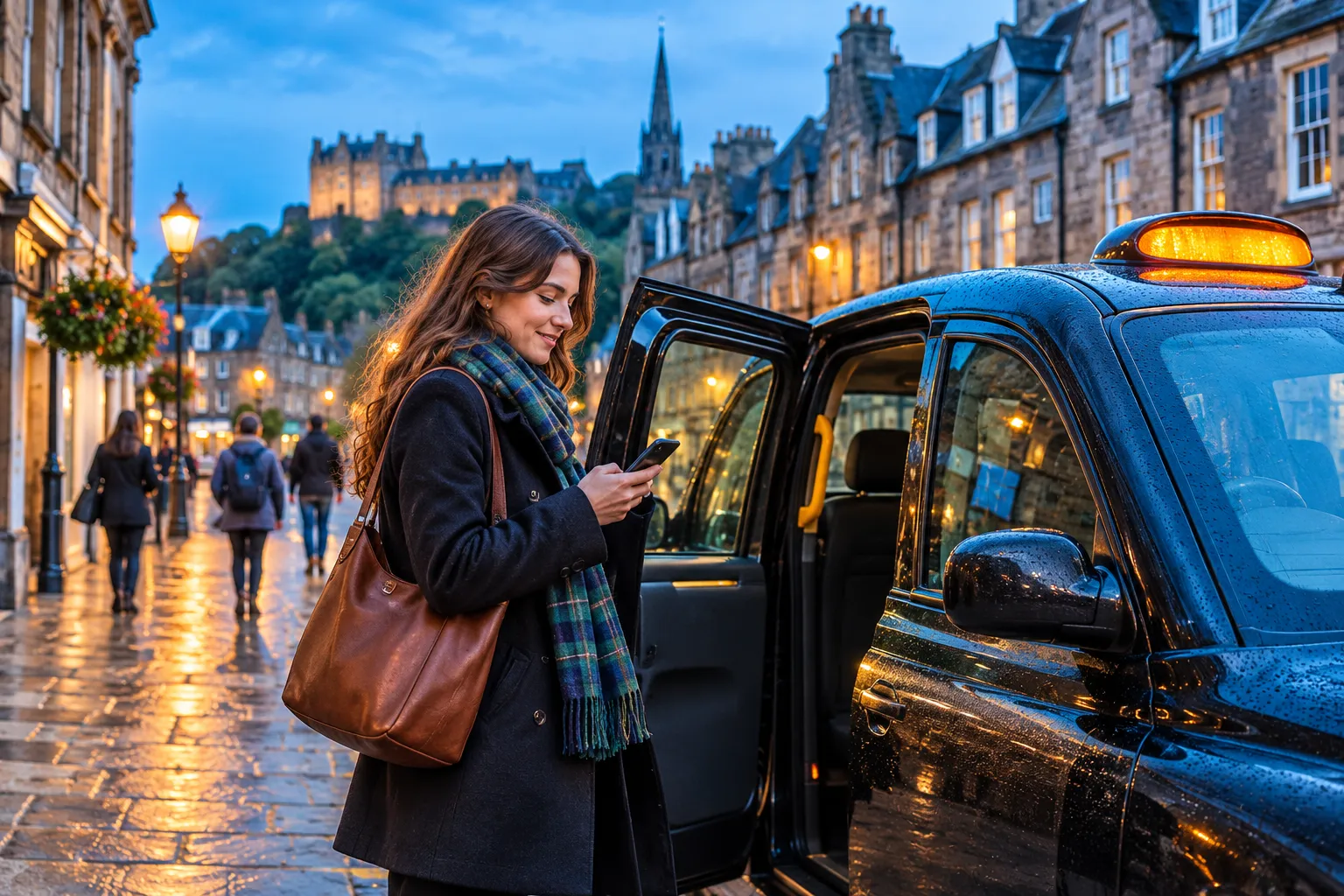
A booking app can display a fixed price, an estimate or a demand-based quote. The presence of an app—or the absence of a physical meter—does not, by itself, tell us whether the fare is fair.
Are all cab tariffs set by the council?
No. Taxi and private-hire rules differ across the UK.
In Scotland, licensing authorities have a duty to set taxi fare scales. In England, authorities can set maximum local taxi fares, and most do, but they do not have the same power to set private-hire fares. The vehicle’s licence, local rules and journey circumstances matter. Scottish Government taxi-fare guidance, Department for Transport guidance
It would therefore be misleading to say that every cab fare is council-set, or that fitting a meter automatically brings every vehicle under identical pricing rules.
What a regulated tariff offers is an external framework for the charge. Where that tariff applies, being busy does not give a driver permission to invent an extra charge beyond the permitted fare.
The driver deserves clarity too
Passengers understandably want to know what they will pay. Drivers deserve to understand what they will earn.
A published meter tariff tells a driver the basis on which a journey will be charged. An upfront booking can go further by showing the proposed fare before the driver accepts.
However, the passenger’s payment and the driver’s take-home earnings are different figures.
Commission, booking deductions and operating costs can affect what remains. A higher passenger fare does not necessarily mean the driver receives a proportionately higher payment.
For drivers, fair pricing should mean clear answers to three questions:
What is the fare? What will be deducted? What will I receive?
That matters whether the booking comes by telephone, through an app or from a taxi rank.
Does “no surge pricing” mean the fare never changes?
It should not be confused with that.
Published taxi tariffs can include different rates for particular times or days, alongside authorised extras. A night rate or holiday tariff is different from an unpredictable demand multiplier.
One is a stated pricing rule that passengers and drivers can check. The other changes in response to conditions at the time of booking.
Both need to be explained honestly. A service should not advertise “no extra charges” if legitimate additional charges can apply.
For passengers, the essential question is: will I understand the price before I commit, and can I check the reason for any difference?
Hotels raise prices. Why shouldn’t cabs?
There is a reasonable argument for charging more when demand is high.
Drivers working late nights, public holidays or difficult shifts may expect higher earnings. Supporters of demand-based pricing argue that higher fares can encourage more drivers to work when cars are needed.
Drivers are running businesses. Fairness cannot mean expecting them to absorb rising costs while keeping fares unchanged indefinitely.
But the hotel comparison has limits.
Someone booking a weekend away may be able to change dates or choose another destination. A person finishing a late shift, leaving hospital or trying to get home after an event may have fewer practical choices.
An upfront price can be transparent and still feel unaffordable. Equally, a low fare that leaves the driver unable to earn a sustainable income is not a fair solution.
The challenge is balancing access to transport with the economics of providing it.
What would a fair system look like?
Our starting point for this discussion is straightforward: a fair fare should be understandable, lawful and sustainable for the person doing the driving.
That means:
- Passengers can distinguish a fixed price from an estimate.
- Drivers can see the payment terms and deductions.
- Applicable tariffs and permitted extras are explained.
- Agreed prices are honoured within clearly stated conditions.
- Higher passenger charges are not automatically presented as higher driver earnings.
- Drivers’ costs and income receive serious consideration when regulated fares are reviewed.
A meter can support that fairness. So can a properly explained fixed fare. Neither should be treated as a substitute for clear information and accountable business practices.
Drivers: which would you choose?
Would you prefer a published meter tariff, a fixed fare shown before acceptance, or the opportunity to earn more through demand-based pricing?
Would predictable night and holiday rates offer a better balance than changing prices whenever demand rises?
And passengers: would you accept a clearly published higher rate at busy times if you understood it before booking?
What is fair—and who should decide?
We would like to hear both sides. Tell SafeKab what you prefer as a driver or passenger, and why.