Severe winter weather creates the most demanding driving conditions faced on UK roads. Snow, ice, freezing rain, and sub-zero temperatures drastically reduce grip, visibility, and stopping ability. We set out a comprehensive, authoritative guide to winter driving that equips drivers with the knowledge and practical techniques required to remain safe, composed, and in control throughout the coldest months.
When Winter Driving Should Be Avoided Altogether
Driving in snow and ice should only be undertaken when essential. Icy roads dramatically increase the likelihood of collisions, breakdowns, and extended delays caused by blocked routes or stranded vehicles. Even confident and experienced drivers remain vulnerable to sudden weather shifts, untreated surfaces, and the actions of other road users.
Remaining at home removes the risk entirely. When travel is unavoidable, preparation and discipline become critical.
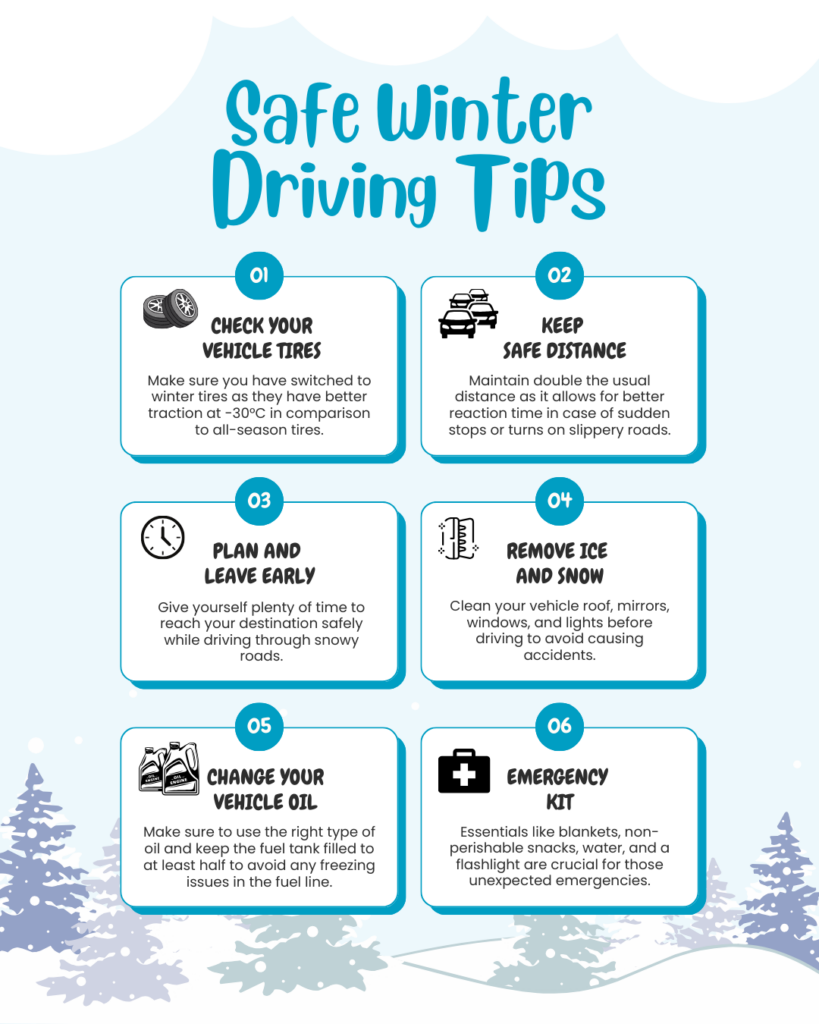
Essential Winter Journey Planning and Preparation
Route and Timing Strategy
- Prioritise major A roads and motorways that are more likely to be gritted
- Avoid rural shortcuts, steep gradients, shaded lanes, and untreated side roads
- Check local weather warnings and live traffic updates before departure
- Allow significantly more time than normal for every journey
Emergency Equipment to Carry in Winter
Every vehicle used in winter conditions should carry:
- Warm clothing, gloves, a hat, and a blanket
- Food, water, and a thermos, if possible
- Torch with spare batteries
- Fully charged mobile phone and power bank
- Ice scraper and de-icing spray
- Shovel, grit, sand, or cat litter
- First aid kit
- Jump leads
These items reduce risk if stranded and provide critical self-sufficiency during prolonged delays.
Vehicle Readiness for Snow and Ice
Tyres and Traction
Tyres are the only contact between the vehicle and the road. In winter conditions, their importance cannot be overstated.
- Ensure a minimum of 3 mm tread depth, exceeding the legal requirement
- Check tyre pressures regularly, as cold temperatures reduce pressure
- Fit winter tyres where possible for improved grip below 7°C
Winter tyres dramatically shorten braking distances and improve steering control on snow, slush, and ice.
Fluids, Battery, and Visibility
- Use screenwash with antifreeze properties
- Check engine oil, coolant, and brake fluid levels
- Ensure battery health, as cold weather reduces starting power
- Fully clear all windows, mirrors, lights, cameras, roof, bonnet, and number plates
Partial clearing is dangerous and illegal. Snow left on the roof can slide forward under braking or detach at speed.
Correct Use of Lights in Snowy Conditions
Headlights and Visibility
Dipped headlights should be used whenever visibility is reduced by snow, falling light levels, or road spray. Automatic lighting systems should be manually overridden where necessary to ensure lights are active.
Fog Lights and Legal Use
Fog lights should only be used when visibility falls below 100 metres.
- Rear fog lights dazzle following drivers in snow spray
- Front fog lights reflect off the snow and reduce clarity
- The main beam should never be used in traffic or in falling snow
Correct lighting improves awareness without impairing others.
Safe Following Distances on Ice
Stopping distances on ice can be up to ten times longer than on dry roads.
- Maintain a following distance of up to 20 seconds in icy conditions
- Use fixed roadside objects to measure spacing accurately
- Expect other vehicles to cut into gaps, and remain patient
Space is safety. Tailgating in winter conditions is a leading cause of multi-vehicle collisions.
Smooth, Controlled Driving Techniques
Winter driving demands precision and restraint.
Acceleration and Gear Selection
- Pull away gently with minimal throttle
- Use higher gears sooner to reduce torque to the wheels
- Avoid sport modes and aggressive throttle response
- Use winter or snow driving modes if available
Steering and Braking Control
- Make all inputs slow, deliberate, and progressive
- Brake early and lightly, allowing engine braking where possible
- Avoid sharp steering movements or sudden corrections
Abrupt actions overwhelm limited tyre grip and lead directly to loss of control.
Managing Skids Safely and Calmly
Understanding skid response is essential knowledge for winter drivers.
Early Warning Signs
- A sudden reduction in tyre noise often indicates ice
- Light steering feel suggests reduced grip
Correct Response to a Skid
- Lift off the accelerator immediately
- Do not brake during the skid
- Steer gently in the direction the vehicle is sliding
- Allow speed to reduce naturally until control returns
Practising gentle brake tests on quiet, straight roads helps gauge grip levels.
Maintaining Full Situational Awareness
Winter hazards extend beyond the road surface.
- Approach bends slowly and maintains constant speed
- Watch for snowploughs, gritters, and stranded vehicles
- Expect unpredictable movements from other drivers
- Remain aware of traffic to the sides and rear
If followed too closely, avoid confrontation. Pull over safely when possible and allow impatient drivers to pass.
Driving on Hills, Bends, and Junctions in Snow
Uphill Driving
- Build momentum gently before the incline
- Maintain a steady speed without accelerating sharply
- Avoid stopping mid-slope where possible
Downhill Driving
- Select a low gear to control speed
- Brake lightly and early
- Never coast in neutral
Junctions and Roundabouts
- Approach slowly with maximum observation
- Expect vehicles to slide through give way lines
- Proceed only when fully confident of space and grip
Legal Responsibilities and Winter Driving Standards
UK drivers remain fully responsible for their vehicles in all weather conditions. Courts do not accept snow or ice as justification for careless or dangerous driving.
Guidance aligns with standards set out in the Highway Code, which emphasises anticipation, reduced speed, and increased stopping distances in adverse weather.
Winter Driving Confidence Built on Discipline
Safe winter driving is defined by preparation, patience, and restraint. By prioritising vehicle readiness, maintaining generous space, and driving with smooth precision, drivers significantly reduce risk even in the harshest UK winter conditions. Snow and ice demand respect. Those who adapt their behaviour accordingly remain in control when it matters most.
Why Choosing SafeKab Is the Safest Way to Travel This Winter
Winter conditions significantly increase the risk for drivers, pedestrians, and public transport users alike. Snow, ice, reduced visibility, and sub-zero temperatures create hazards that extend far beyond the driver’s seat. In these conditions, professional transport offers a level of safety, reliability, and reassurance that private travel often cannot match.
The Advantage of Using SafeKab in Winter Conditions
SafeKab is designed specifically to reduce risk during high-risk journeys, making it an ideal choice throughout winter.
Compared with Driving Yourself
- No exposure to icy roads, skidding, or extended stopping distances
- No stress navigating the untreated side roads or steep gradients
- No responsibility for vehicle recovery, breakdowns, or collisions
- No need to clear snow, de-ice windows, or assess tyre condition
SafeKab drivers are experienced in winter conditions, operate well-maintained vehicles, and adapt their driving style to the weather in real time.
Compared with Walking in Snow and Ice
- Eliminates the high risk of slips, falls, and fractures on icy pavements
- Protects against wind chill, freezing rain, and reduced visibility
- Removes the danger of crossing poorly treated roads in the darkness
- Ideal for early mornings, late evenings, and rural areas
Pedestrian injuries rise sharply in icy conditions. SafeKab provides door-to-door safety when pavements and crossings become hazardous.
Compared with Buses and Public Transport
- No waiting at exposed stops in freezing temperatures
- No overcrowding or missed services during the disruption
- No walking long distances on untreated pavements
- Direct, fixed fare journeys with no changes or delays
Winter weather frequently disrupts bus timetables, while SafeKab offers predictable travel even when conditions deteriorate.
Professional Winter Driving You Can Rely On
SafeKab journeys are built around safety-first principles:
- Fully licensed drivers
- Vehicles suited to winter road conditions
- Real-time tracking and fixed fares
- Reduced exposure to high-risk environments
- Ideal for night travel, solo passengers, and vulnerable users
When roads are icy and visibility is poor, transferring responsibility to a trained professional significantly reduces overall risk.
Winter Travel Without Compromise
Snow and ice demand careful decision-making. Choosing SafeKab removes uncertainty and replaces it with controlled, professional transport designed around passenger safety and reassurance.
For winter journeys where safety matters most, SafeKab provides a dependable alternative to driving, walking, or waiting in the cold.
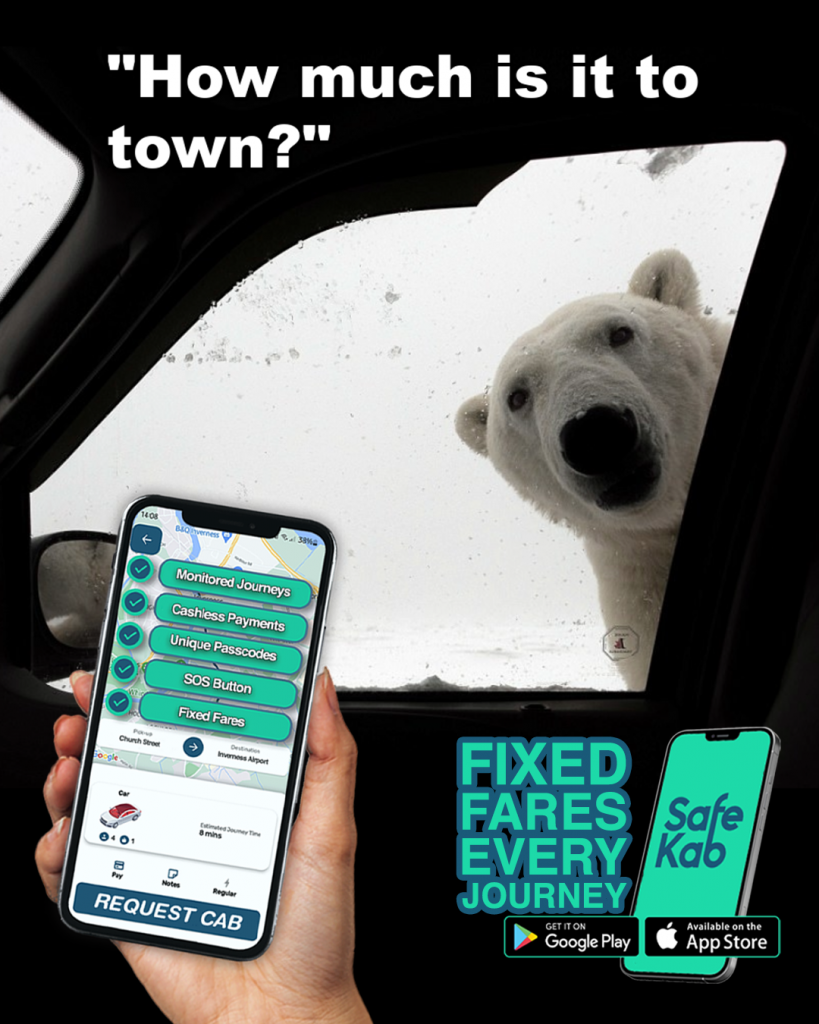
Download the SafeKab App Today
Make winter travel safer, simpler, and more reliable.
Download the SafeKab app now and travel with confidence throughout the winter season.